
< Teachers
Intelligent Perception of Maritime Targets
Maritime Risk Assessment and Emergency Management
Marine Big Data Mining
Maritime Target Drift Trajectory Prediction
Ocean Environmental Monitoring and Forecasting
Artificial Intelligence Applications in Marine Systems
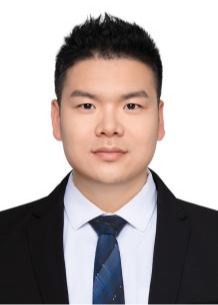
Shibiao Fang is a Professor at the Faculty of Maritime and Transportation, Ningbo University, and serves as both Ph.D. and Master's supervisor. He is recognized as a core academic member of the faculty and has been selected for several prestigious talent programs, including the Bao Yugang Outstanding Talent Program, Ningbo Top Talent Program, Pengcheng Talent Program of Guangdong Province, and the Shenzhen High-Level Talent Program.
His research focuses on the systematic and long-term development of intelligent perception and computational technologies for marine environments. His recent work addresses the challenge of low-accuracy prediction of maritime target drift trajectories by integrating visual information with physical process modeling to develop intelligent monitoring and forecasting systems for dynamic maritime targets.
Professor Fang has led and participated in more than ten national and regional research projects, including the National Natural Science Foundation of China (NSFC) General Program, NSFC Key Program, sub-projects of the National Key R&D Program of China (14th Five-Year Plan), the China Postdoctoral Science Foundation, and provincial-level scientific research funds.
To date, he has published over 40 academic papers, obtained more than 10 national invention patents, and received multiple awards at provincial, municipal, and university levels.
Undergraduate Courses:Fundamentals and Applications of Artificial Intelligence
[1]Shibiao Fang∗, Wenrong Tu, Lin Mu, Zhilin Sun, Qiuyue Hu, Yang Yang. Saline alkali water desalination project in Southern Xinjiang of China: A review of desalination planning, desalination schemes and economic analysis. Renewable and Sustainable Energy Reviews, 2019, 113: 109268.
[2]Zhenyu Wang, Shibiao Fang, Xiaojian Chen, Zhilin Sun, Fuqiang Li. Rural hydro-power renovation project implementation in China: A review of renovation planning, renovation schemes and guarantee mechanisms. Renewable and Sustainable Energy Reviews 51(2015):798-808.
[3]Shibiao Fang, Lin Mu*, Sen Jia, Kuan Liu, Darong Liu. Combining artificial intelligence and laboratory experiments to explore behavior process of sunken and submerged oil: A typical oil drift and diffusion detection technology. Journal of Cleaner Production, 2022, 367: 133026.Shibiao Fang, Lin Mu*, Wenrong Tu. Application design and assessment of a novel small-decentralized solar distillation device based on energy, exergy, exergoeconomic, and enviroeconomic parameters. Renewable Energy, 2021, 164: 1350-1363.
[4]Shibiao Fang, Lin Mu*. Heat and mass transfer analysis during gas-liquid separation in an evaporator device for desalination. Desalination, 2020, 486: 114430.
[5]Shibiao Fang, Lin Mu*, Wenrong Tu. Heat and mass transfer analysis in a solar water recovery device: Experimental and theoretical distillate output study. Desalination, 2021, 500: 114881.
[6]Shibiao Fang, Wenrong Tu*, Weigang Lu. Artificial intelligence vision technology application in sustainability evaluation of solar-driven distillation device. Environmental Technology & Innovation, 2024, 36: 103731.
[7]Wenrong Tu, Shibiao Fang, Zhi Ding*, Tangdai Xia, Qiuyue Hu. Application design and two-phase flow simulation of a circulating solar heat collection tube in the desalination system of western China. Solar Energy, 2023, 258: 383-403.
[8]Shibiao Fang, Lin Mu*, Sen Jia, Kuan Liu, Darong Liu. Deep learning technique for examining the mechanism, transport, and behavior of oil hazardous material caused by wave breaking and turbulence. Environmental Research Letters, 2022, 17: 104058.
[9]Shibiao Fang, Lin Mu*, Sen Jia, Kuan Liu, Darong Liu. Research on sunken & submerged oil detection and its behavior process under the action of breaking waves based on YOLO v4 algorithm. Marine Pollution Bulletin, 2022, 179: 113682.
[10]Shibiao Fang, Lin Mu*, Kuan Liu, Darong Liu. Detection of the Sinking State of Liquid Oil in Breaking Waves Based on Synthesized Data: A Behavior Process Study of Sunken and Submerged Oil. Journal of Marine Science and Engineering, 2022, 10, 604.
[11] Zhiwei Zhou, Shibiao Fang*, et al. Research on the Standardized Management System and Operational Indicators of Water Control Dikes Based on GA-BP Artificial Neural Network Model. Water 2023, 15, 3713.
[12]Zhiwei Zhou, Shibiao Fang*, et al. The Identification and Quantification of Hidden Hazards in Small Scale Reservoir Engineering Based on Deep Learning: Intelligent Perception for Safety of Small Reservoir Projects in Jiangxi Province. Water 2024, 16, 2880.
[13]Shibiao Fang, Wenrong Tu, Lili Zhu, Zhilin Sun. Sunlight concentration effect analysis of lenses on single-slope solar still. Water Supply, 2018, 18(6): 1888-1896.
[14]Zhilin Sun, Wenrong Tu, Shibiao Fang*. Experimental study of a solar water treatment device with dome structure cover in winter: performance evaluation and comparative analysis. Water Supply, 2022, 22(1): 945-956.
[15]Zhilin Sun, Shibiao Fang, Dan Xu, Wenrong Tu. Experimental study on lens type solar still with single slope and single basin. Desalination and Water Treatment, 2017: 1-14.
[16]Wenrong Tu, Shibiao Fang*, Zhilin Sun. Experimental study and flow analysis on a new design of water-retaining sluice gate. Water Practice & Technology, 2020, 15(2): 311-320.
